Heraldry at Kentstown, Co Meath
This article was first published in Riocht Na Midhe in 2011
The heraldic heritage of County Meath is very much in evidence on buildings, in graveyards, in the ‘big’ houses and in churches throughout the county. The heraldry at Trim (Hickey 1988/9, 129-40) and that on Sir Thomas Cusack’s monument (Hickey 1971, 75-91) are two notable examples recorded in this Journal. St Mary’s Church of Ireland at Kentstown, Co Meath contains several stained-glass windows in memory of various members of the Somerville family and they display heraldry mainly associated with that family. This church illustrates many of the intricacies associated with the subject possibly much more than any other church or building in the county.
It was in the
twelfth century that armour-clad knights began to use brightly coloured
patterns and emblems on banner and shield as a means of identification in
battle. These emblems were also displayed on the linen surcoat which was worn
over the armour, and so came to be called cotearmours,
or coats of arms. Later it became the custom for knights, especially those
taking part in tournaments, to wear a three-dimensional crest modelled in wood or boiled leather, on top of the helmet,
usually with a wreath or torse, made of twisted silken bands
covering the joint between helm and crest. It is an all-too-frequent error to
refer to the arms or shield device as the crest, which is in fact a distinct
item. More often than not the arms and crest are quite dissimilar (Crotty 2009,
140-1).
Later on, heraldry took on a less practical use but it continued to be
used by leading families to highlight their importance or their network of
influential relationships in their local community.
The heraldry at
Kentstown is dominated by that of the Somerville
HERALDRY OF
THE SOMERVILLE FAMILY
The heraldry
associated with the Somerville family is displayed both on monuments and in stained
glass at Kentstown. The heraldic details in the stained glass are generally replicated
on the monuments. The heraldic colours are generally not indicated on the
monuments so this article concentrates on the heraldry depicted in the stained-glass
windows. One of the windows was erected to the memory of William Somerville,
first Lord Athlumney who died in 1873 and the first mention of the windows in
the vestry book (1876-1957) is from a meeting held in February 1881. It was
resolved to insure the stained-glass windows and the organ for a sum of £400
through the RCB (Representative Church Body). Lady Athlumney, being represented
by the chairman ‘was willing to pay the premium on the windows connected with
her family on the condition that if destroyed she should have the same voice in
deciding on the designs of their ones [windows] to replace them as if she were
putting them in at her own expense’ (The Vestry Book for
Kentstown, RCB Library).
The early background to the Somerville heraldry provides a context for that at Kentstown. The earliest
arms of the Scottish Somerville family appeared on a seal appended to a grant, formerly in the Scots
College in Paris, by William de Somerville, of the church of Carnwath to the see of Glasgow between
1180 and 1189. The bearing was ‘a lion rampant’, which Riddell describes as an:
Extremely old instance, perhaps un-paralleled, of an armorial ensign in Scotland. The lion rampant
appears again in the first and fourth quarters of the shield of Sir John Somerville of Quathquahan and
Cambusnethan (ob. 1513) … the second quarter bearing six stars and not nine stars as now, were at an
early period the bearing of Baillie his mother’s surname (Campbell 1897, 153).
Sir John’s father, John, second Lord Somerville, in 1455/6 married secondly Mariota, daughter of Sir
William Baillie of Lamington (Lanarkshire). Campbell also notes that the three crosses crosslet fitchy
(fitchée) in the third quarter may have reference to the crusilly shield which was adopted by the Lords
Somerville instead of the lion rampant.
The arms (figure 1) on a gravestone at Monea, Co Fermanagh and the arms (figure 2) in the pediment of
Somerville House, Kentstown provide the interesting link between the Somervilles of Cambusnethan in
Scotland and the Co Meath family. The gravestone at Monea is for Thomas Somerville of Drumadown,
Co Fermanagh who was buried in 1669. Steele (1904, 76-7) notes the inscription on the stone as ‘here
lieth the body of Thomas Somervell, gentleman who deceased the sixth day of April anno Dom 16..’.
However he incorrectly describes the arms as those of Somerville
unnamed family. In fact the arms at Monea are quartered and carry a lion rampant in the first and third
quarters, six mullets in the second quarter and three crosses in the fourth quarter.
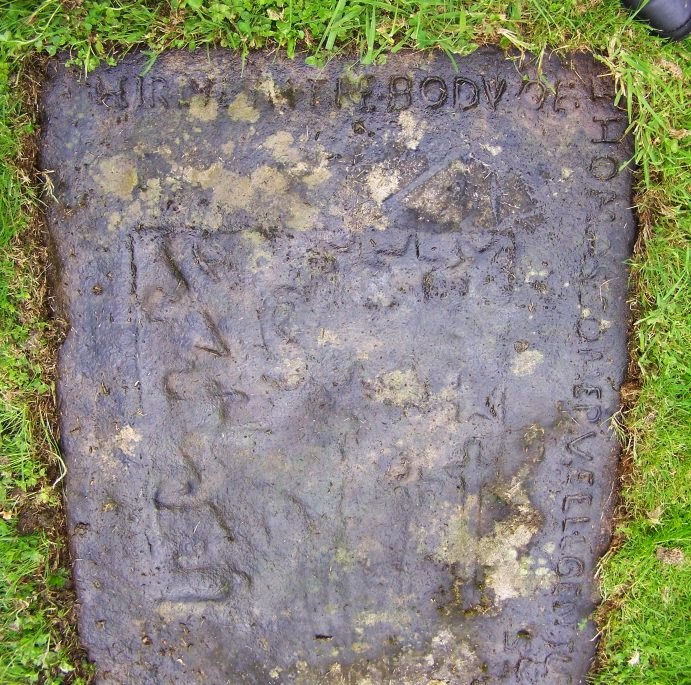
Figure 1: Somerville arms at Monea, Co Fermanagh

Figure 2 Somerville and Warburton arms at Somerville House
The arms on
Somerville House (figure 2) are similar, the lions are in the first and fourth
quarters while the six mullets and three crosses are in the second and third
quarters respectively. The arms of Warburton appear on an inescutcheon of
pretence, in reference to the marriage in 1740 of Sir Quaile Somerville to Mary
Warburton. Her father was George Warburton who died on 1 December 1730 and his gravestone
is at Kentstown. An inescutcheon of pretence is a small shield superimposed at
the centre on the main shield usually for the heiress wife of the gentleman. The
motto on Somerville House reads ‘Fear God in Life’. The presence of the lions
on these two monuments probably refers back to the Cambusnethan family as
discussed by Campbell
The presence of the
Somerville ames Quaile and Catherine
Somerville) and the arms for Somerville

Figure 3: Somerville arms at St Mary's Church, Kentstown

Figure 4: The Somerville arms impaling those of Crofton
The window erected
‘in memory of Sir Marcus Somerville Bart M.A. who died July 11th
1831 and of Mary Anne his wife who died Septr 19th 1821’
comprises two panels and contains the arms shown in figures 5 and 6. Sir Marcus
Somerville (fourth baronet) was son of Sir James Quaile Somerville. The
tinctures of the arms (figure 5) match those given for Somerville Somerville United Kingdom

Figure 5 Somerville Arms

Figure 6: Somerville and Meredyth Arms
The window
‘erected to the memory of Lady Harriet Somerville who departed this life on the
3rd of Decr A.D. 1843 aged 33 years’ bears the Somerville
arms (similar to those shown in figure 3) on one of its two panels. The
presence of the initials WMS and MHS on the window are accounted for by William
Meredyth Somerville and his wife, Maria Harriet Somerville, daughter of Henry
Nathaniel Conyngham (1st Marquess Conyngham). The other panel on the
window displays the Conyngham arms (figure 7) on a lozenge. The arms of an
unmarried lady or widow are shown on a lozenge. However in practice the arms of
the wife’s own family before her marriage are often portrayed on a lozenge as
they are at Kentstown. The mottoes of the Somerville and Conyngham families are
also on the window.

Figure 7: The Conyngham Arms
The east window could
be described as a ‘rose window’ a generic term applied to a circular window
that is divided into segments by stone mullions and tracery. The stained glass contains
the double impalement of the Somerville arms along with those of Conyngham and
Jones as shown in figure 8. A brass beneath the window notes the dedication of
the window ‘to the beloved memory of William Meredyth Baron Athlumney and Baron
Meredyth born June 13 1803 died Dec 7 1873. This window is erected by his widow
and their children.’ The double impalement of arms represents William’s two
marriages. The arms of his first wife, Lady Harriet Conyngham, appear on the
dexter side (to the viewer’s left) while those of the second wife, Maria
Georgina Jones, are carried on the sinister side (right to the viewer) and the
arms of Lord Athlumney himself are shown in the centre. A coronet is above the
shield and the Somerville
The Conyngham
arms on the dexter side of the shield are similar to those illustrated in
figure 7. The quartered arms for Somerville in the centre are detailed in
Appendix 1 under ‘Athlumney’ where the first and fourth quarters carry the
‘modern’ Somerville arms (figure 5), the second quarter contains the arms of
Warburton for Mary Warburton, great-grandmother of William and the third
quarter bears the Meredyth arms for William’s mother, Mary Anne Meredyth. The
Jones arms on the sinister side of the shield are also quartered. The first and
fourth quarters contain the lions of the Jones arms (website 1) while the
second and third quarters both carry the two lion’s heads of the Allen arms.
These quartered arms are for Herbert George Jones (father of Maria Georgina); sergeant-at-law
who died on 17 February 1866 aged 61. He was second son of Calvert Richard
Jones of Heathfield Lodge in Glamorgan (Burke 1832, ii, 69). There were three
men called Calvert Richard Jones, grandfather, father and son. The grandfather who died in 1781 inherited estates which
were formerly the property of the Herbert family of Plas-newydd, Swansea , through his wife Elizabeth Cardiff and Rector of Loughor, near Swansea
The crescent on
the Meredyth quarter (figure 8) on the Somerville
Here lyeth ye
body of Richard Meredyth D.D. Lord Bishop of Leighlin & Ferns and Dean of
this Cathedral of St Patricks who dyed August the 3d A.D. 1597. In memory of
whom & Sever (sic.) all of his family who lye here interred. This monument
is erected by Richard Meredyth of Shrowland in ye county of Kildare Esq:
Charles Meredyth of Newtown
An inscription from
1853 on the monument notes its renovation by both Sir William Meredyth
Somerville and his cousin Sir Henry Meredyth descendants of the bishop. A later
inscription on the monument reads ‘Renovated by William Meredyth Baron
Athlumney in the Peerage of Ireland, Baron Meredyth in the Peerage of the
United Kingdom, and Sir Henry Meredyth Baronet decendants (sic.) of the within
named Prelate A.D. 1866’. It is obvious that this inscription was added after
William Somerville became Baron Meredyth in May 1866. He was the first
descendant of the bishop to be created a baron.
The monument at
St Patrick’s also includes the Meredyth arms that contain the collared and
chained lion. It is interesting to note that these were not the arms of the
bishop. The arms from the funeral entries (GO Ms 64, p15 & GO Ms 65, p106)
for Bishop Richard Meredyth contain a chevron between three goats’ heads. The
bishop is descended on the direct male line (13 generations later) from Ithel
Velyn Ap Llywelyn (born about 1083) and the arms of the bishop are thought to
be derived from those arms (Cooke 1857, 18) attributed to his illustrious
ancestor. The bishop’s sons Sir Thomas and Sir Robert who were knighted in 1630
and 1635 (website 4) respectively bore a different coat of arms to those their
father. Their arms containing the collared and chained lion are recorded on the
funeral entry of Charles Meredyth (GO Ms 67, p225) and on that of Sir Robert
Meredyth (GO Ms 67, p147). The label (a mark of cadency indicating an eldest
son) is also included on the arms of Charles, eldest son of Sir Thomas.

Figure 8: {Conyngham}, {Somerville, Warburton, Meredyth}, {Jones, Allen}
The east window at Kentstown also bears
the initials of FEFS, GALS, CLS and MBS for the four daughters of William and
Maria Georgina namely Florence Emily Frances, Georgina Alice Lizzie, Cecilia
Louisa and Mary Anne Blanche Somerville. It also bears the initials ‘A’ and
G.A. for Athlumney and Georgina (Baroness) Athlumney respectively. Georgina
erected a monument in the church to the memory of
her parents, Herbert George Jones and Maria Alicia (who died 21 November 1865).
It also bears the Jones crest and motto. A window to the left of the east window
comprises two panels. One of the panels contains the
arms of Plunkett while the second panel carries the double impalement of
arms (figure 9) representing Lord Athlumney’s two marriages. The arms along
with a baron’s coronet, the family crest, supporters and motto (Crisp 1904,
107) are all displayed on this window as shown in figure 9. The difference
between the coronets in figures 8 and 9 is noted, the coronet shown in figure 9
is that of a baron while artistic licence seems to have taken in the depiction the
coronet in figure 8. The grant of supporters to the arms of Rt Hon William
Meredyth Somerville dates from 30 December 1863 (GO Ms 109, 35-6). The lions of the Jones arms are not collared and chained
on this window.
The monuments in
the church to various members of the Somerville family contain heraldry similar
to that displayed in stained glass. The monument to Lady Harriet Conyngham
contains an impaled shield. The dexter side carries the quartered Somerville
arms while the sinister side depicts the quartered arms for Conyngham and
Burton as shown in figure 10. These latter arms are accounted for through
Harriet’s great-grandparents, Francis Burton and Mary Conyngham. Their son Francis
Pierpoint (Harriet’s grandfather) became second Baron Conyngham on the death of
his uncle Henry Conyngham in 1781 (Lodge 1789, 186-8) when he assumed the
Conyngham name.

Figure 9: Full Achievement of Arms
{Conyngham}, {Somerville, Warburton, Meredyth}, {Jones, Allen}
The monument to
Margery, Baroness Athlumney, younger daughter of Henry Boan and widow of James,
second Lord Athlumney, contains the arms (figure 11) of Somerville impaled with
another coat that appears to be for Boan. The General Armory does not give the
arms for Boan but it is likely that it is derived from the ancient family of
Bohun whose arms contain a bend between two cotises (narrow stripes) and six
lions (Burke 1884, 960). The supporters and baron’s coronet are also present.
Margery married Lord Athlumney in July 1919. He died on 8 January 1929 at
Kentstown without children and on his death his baronies became extinct while
the baronetcy became dormant. Margery died in 1946. The estate subsequently
went to Quentin Agnew (nephew of Margery). In 1950 on attaining the age of 21,
he adopted the name and arms of Somerville and legally changed his name to
Quentin Agnew-Somerville under the terms of his uncle’s will. He now lives in
the Isle of Man and one of his daughters is the well-known actress, Geraldine
Somerville who has played Lily Potter in all six Potter movies.

Figure 10: Somerville and Conyngham & Burton arms

Figure 11: Somerville and Boan arms
see:
http://irishheraldry.blogspot.ie/2016/08/barr-coat-of-arms.html
The arms of
Plunkett

Figure 12: Plunkett Arms

Figure 13: Nolan and Boone Arms
HERALDRY OF
THE NOLAN, SMITH AND TOLER FAMILIES
The Nolan and Toler families were
connected with Kentstown through family members who ministered there as clergymen.
The Smyth family resided at Besborough House (Mullafin) in the parish. One of
the windows is dedicated to Revd Frederick Nolan and a brass nearby bears the
following inscription:
In memory of Frederick Nolan LLD FRS and
for 42 years vicar of Prittlewell in the county of Essex England descended from
the ancient family in this country and its last surviving head endued with
intellect of the highest order adorned with learning of rarely equalled extent
and distinguished by virtue which could adorn the Christian Minister, the
husband and the friend, he closed a long and valued life in his 85th
year at Geraldstown House in this county Sept 16th 1864.
His remains are interred in the family vault at Navan. This memorial is erected
by his widow near the spot where he performed his last ministerial office and
in the church where for the last ten years of his life he consecrated his
Sabbaths to the worship of Almighty God.
There is also a monument to him and his
wife at St Mary’s Church of Ireland, Navan. It reads: ‘Sacred to the memory of
Angelina, widow of the above Revd Frederick Nolan, LLD FRS, born 22nd
October 1802, died 2nd August 1890’.
The first of the two panels on the Nolan
window at Kentstown bears the arms, supporters, crest and motto as shown in figure
13. The Nolan arms (Burke 1884, 736) are on the dexter side while the arms of Boone
are on the sinister side. The maiden name of Revd Nolan’s wife, Angelina, has been
confirmed through the records of the Scratton family (website 5) of
Prittlewell. A letter (D/DSc/F21) from David Robert Scratton to his aunt
Angelina Nolan is dated 28 March 1889. The marriage certificate (D/DSc/F29) of John
Bayntun Scratton (father of David) indicates his marriage to Harriet Boone of
St Martin-in-the-Fields, Middlesex on 20 February 1813. The Boone arms as depicted
at Kentstown are listed in the General Armory (Burke 1884, 98) under the names of
Bone or Boun both variants of the name Boone. The motto is in an unusual script
that has not been deciphered. It is likely to be associated with Nolan’s
biblical work. The Bible is also depicted in the stained glass. His major work
of 1815 was entitled 'An Inquiry into the Integrity
of the Greek Vulgate or Received Text of the New Testament'. The second panel on
the Nolan window depicts the family arms, supporters and motto as in the
previous panel, the helmet carries a fleur-de-lis as crest rather than the demi-lion
in the first panel.
The monument to Revd John Toler who died
on 21 November 1831 bears the crest of that family a fleur-de-lis (Fairbarn 1986,
354) along with the motto ‘right can never die’. Revd John Toler who in 1784 entered T.C.D. became
Rector of Mourne Abbey in 1795 and subsequently served as Rector in the
parishes of Slane and Kentstown. He married Frances Metge on 25 November 1802
(website 6), (website 7, Maunsell 1903, 122). Frances was daughter of Peter Metge (Baron of
the Court of Exchequer in Ireland

Figure 14: Smith and likely Wallace arms at Kentstown

Arms at Annesbrook House, likely for Wallace/
The final family of interest at
Kentstown is that of Smith. The window dedicated to Emily Smith bears her
initials ‘E.S.’ and the inscription reads ‘to the beloved and ever dear memory
of Emily Smith late of Besborough in this parish who departed this life in the
faith of our most blessed Lord and Saviour Jesus Christ. April 13 1864’. Both panels
of the window each display the arms of Smith. In one case these appear alone
while on the other (figure 14) they are quartered with a second coat: - a
silver lion rampant surrounded by eight golden mullets on a red field within a
border composed of silver and blue sections. Where it not for the mullets these
would be the well known arms of Wallace. It is possible that they represent a
differenced version of this coat but no marriage to a Wallace heiress, which
would suggest the quartering, has been found. This coat can also be seen on a
lozenge in a window at Annesbrook House, Duleek, Co Meath (figure 15).
Henry Smith of Beabeg, Co Meath married secondly in 1809 Elizabeth
Radcliffe of Tinnakilly, Co Wicklow. They had fifteen children including Emily
Smith (1823-64). Annesbrook House was purchased by
Henry Smith after 1810 for Stephen Henry, the eldest son from the second marriage.
Mrs. Emily Cock in her family papers dating from 1910-20, now at Piperstown, Co
Louth notes that her grandmother, Mrs. Elizabeth Smith (née Radcliffe) bought
the lands at Besborough during the lifetime of her husband, Henry. ‘He took the
greatest of interest in the planning building of the house, which was built
entirely with my grandmother’s money so she was able to leave it to whomsoever
she chose … which she did’ (Cock, page 106). After her husband’s death in 1857,
Mrs. Smith retired to Besborough House and three of her children lived with
her, namely Emily, Matilda and Kynaston. Most of the family members including
Emily are buried at Duleek and their memorials at Duleek are recorded in this
Journal (O’Boyle 2002, 96-9).
It does not
appear likely that the unidentified Wallace-like quartering stands for Radcliffe.
No special confirmation of arms to
the Tinnakilly Radcliffe family is recorded in The General Armory or at the
Genealogical Office, Dublin. Elizabeth Radcliffe’s mother was Catherine Cox so both
the Radcliffe and Cox pedigrees have been examined for a likely match but none
has emerged. The marriages of
Henry Smith’s ancestors going back to early 1700s are listed in Appendix 3 and
none of these family arms resemble those at Kentstown or Annesbrook. Emily
Smith Cock in her notes mentions that she could go back no further than that
outlined in the pedigree (Appendix 3). The longer established Smith family home
at Beabeg (Co Meath) near Drogheda contains no heraldry nor do two other
prominent Smith houses in Co Louth, namely Greenhills (Drogheda )
and Piperstown. It is then natural to examine the arms of families who were married
to Emily’s brothers and sisters.
Stephen Smith, who inherited Annesbrook, married twice. The arms in
question do not match those of his wives both of which formerly appeared on the
window in Duleek church. Stephen died in 1890 and it is reasonable to assume
the stained glass had been installed by then. Besborough House was inherited by
Stephen’s brother, William. The inscription on his gravestone outside the
church at Kentstown reads ‘Sacred to the memory of William T. Smith of
Besborough (Late Capt H.M. 22nd Regt) sixth
son of the late Henry J. Smith of Annesbrook Esqr J.P., D.L. Born 15th
Jany 1816 died 15th March 1884. Also his dearly beloved
wife Kate Auber Smith who died 24th Jany 1909.’
Of the marriages of Emily’s brothers and sisters, the only one which
might throw light on the identity of the arms is that of Catherine to Sir
Robert Wallace K.C.B., K.C.S.I. on 16 August 1843 at Bath. He was in the Bombay
Staff Corps and first commissioner of Rawulpindi. Catherine was named after her
maternal grandmother Catherine Cox, daughter of the Rev Sir Michael Cox from
where it appears the family wealth came. Papworth (1874, 119) notes the arms of
Wallace as ‘gules a lion rampant argent a bordure wavy of the second charged
with eight mullets of the first’. The General Armory (Burke 1884, 1067) gives
the arms for Wallace as ‘Gules a lion rampant argent within a bordure compony
of the second and azure’. The arms of interest both at Annesbrook and Kentstown
could be blazoned as ‘Gules a lion rampant argent within an orle of mullets or all
within a bordure compony of the second and azure’. These arms appear to be a
combination or variation of the previous two. The window at Annesbrook may have
been erected to commemorate the marriage of Catherine Smith the eldest
surviving daughter of the house (Annesbrook) to Sir Robert Wallace.
Appendix One: Coats
of Arms
All the coats of
arms (unless otherwise indicated) are taken from the General Armory where they
are listed in alphabetical order.
Heraldic terms:
argent = silver, azure = blue, gules = red, or = gold, sable = black, ermine is
a type of animal fur, dexter = right (left as viewed by an observer) and
sinister = left (right as viewed). Some of the other heraldic terms are
technical and the photographs serve as a pictorial illustration.
Allen Per chevron gules and ermine, in
chief two lions’ heads erased or.
Athlumney
Arms: Quarterly:
1st and 4th, Azure, three mullets or, between seven
cross-crosslets fitchy, three and one and two and one, argent for Somerville; 2nd,
Argent, a chevron sable between three Cornish choughs proper for Warburton; 3rd,
Argent, a lion rampant sable, gorged with a collar and chain or for Meredyth.
Crest: A
demi-lion rampant gules, charged on the shoulder with a cross-crosslet fitchy,
and two mullets argent.
Supporters:
Dexter: A
greyhound proper, collared gules, and charged on the shoulder with a mullet and
two cross-crosslets fitchy sable; Sinister: A lion rampant sable collared and
chained or, charged on the shoulder with a cross-crosslet fitchy and two
mullets argent (Crisp 1904, 107)..
Motto: Crains Dieu tant que tu viveras (Fear God as long as thou
shalt live).
Baillie Azure nine stars
three, three, two, one argent.
Boan (Bohun or Boun) Azure on a bend argent cottised or,
between six lions rampant or, three escallops gules.
Boone (Bone or Boun) Argent on a bend azure three fleurs-de-lis or.
Burton Purple
a cross engrailed or between four roses argent barbed vert.
Conyngham Argent a shake fork between three mullets
sable.
Motto:
Over fork over.
Cox (Dunmanway, Baronet) Or three bars azure on a
canton gules a lion’s head erased argent.
Crofton Per pale indented or and azure a lion passant
guardant counter changed.
Ithel
Velyn (Ithel
Velyn Ap Llywelyn) Gules, on a chevron between three goats'
heads erased or, three trefoils slipped vert, for Iorwerth ap Grono, derived
from Ithel Velyn of Yale (Cooke 1857, 18).
Ithel
Velyn Sable
a chevron between three goats heads erased or (Burke 1884, 532).
Jones Ermine, a lion rampant, sable (website
1). Crest: A lions head
couped. Motto: ‘Bene volens’ (‘Wishing well’).
Meredyth Argent a lion rampant sable collared and
chained or.
Crest: A demi-lion rampant collared and chained as
in the arms.
Motto: Fiat Dei voluntas (Gods will be done).
Meredyth (Sir John, Baronet of
Carlandstown (sic.)) Same arms and crest with a crescent for difference.
Meredyth (Bishop
Richard Meredyth) Gules on a chevron sable between three goats' heads erased or
as many trefoils of the last (GO Ms 65).
Nolan
Arms: Azure
on a bend between two fleurs-de-lis or, a lion passant guardant gules holding
in the dexter forepaw a fleur-de-lis of the first.
Crest: A demi-lion rampant gules holding a
fleur-de-lis or.
Plunkett (Lord Dunsany)
Arms: Sable a
bend argent in the sinister point a tower triple-towered of the last.
Crest: A horse passant argent.
Supporters:
Dexter: A Pegasus per fesse or and argent;
Sinister: An antelope argent collared, chained, armed and hoofed or.
Motto: Festina lente (Hasten slowly).
Radcliffe Argent
two bendlets engrailed sable.
Smith: Argent on a bend two bulls erased
azure armed or, three lozenges or. Crest: A demi-bull salient azure and unglued
or.
Crest: A demi-lion rampant sable charged on the
shoulder with a cross crosslet fitchy and two mullets argent.
Supporters:
Dexter: A
greyhound proper collared gules and charged on the shoulder with a mullet and
two crosses crosslets fitchy sable; Sinister: A lion rampant sable collared and
chained or, charged on the shoulder with a cross crosslet fitchy and two
mullets argent.
Motto: Crains
Dieu tant que tu viverans (Crisp 1904, 107).
Somerville
Quarterly, 1st, six
mullets, three, two and one; 2nd and 3rd, a lion rampant;
4th six cross-crosslets, three, two and one (Lodge 1859, 826).
Wallace Gules a lion rampant argent within a bordure
compony of the second and azure.
Wallace Gules a lion rampant argent a bordure wavy of
the second charged with eight mullets of the first (Papworth 1961, 119).
Warburton Argent a chevron between three cormorants
sable.
Appendix Two:
Somerville Pedigree
James Somerville married Elizabeth Hamilton (who died on 7 June
1666), daughter of Thomas Hamilton of Brimhill, Lanarkshire. James Somerville
lived at Tullykelter Castle, Co Fermanagh and died in 1642. James claimed
descent from a Cambusnethan family. Among other children two sons were James
and Thomas.
James Somerville of Tullykelter
Castle married in 1670 Anna Katharina (born in 1631), daughter of Lars Grubbe
Steynfelt. James was her fourth husband. James’s brother was:
Thomas Somerville of Dromadown, Co Fermanagh who
married Jean Warnock, daughter of James Warnock of Enniskillen. Thomas
died on 6 April 1669 and is buried at Monea, Co Fermanagh and their son:
Thomas Somerville born 1667-8 was
alderman of Dublin and he died on 23 July 1718.
He
married Catherine King (who died 3 February 1725), daughter of James King of
Corrard, Co Fermanagh. Their son was:
Sir James Somerville, 1st Bt. He married
Elizabeth Quaile (who died 10 November 1725), daughter of William Quaile on 2
February 1713. He died on 16 August 1748 and he was M.P. for Dublin
Sir Quaile Somerville,
2nd Bt. of Brownstown,
Co Meath, was baptised on 14 March 1714. He married on 19 February 1740 firstly
Mary Warburton (who died in 1748) daughter of George Warburton. He married
secondly Sarah Towers, daughter of Thomas Towers of Archerstown, Co Meath on 11
April 1755. He died on 5 December 1772 and was succeeded by his son James by
his first wife:
James Quaile Somerville, 3rd
Bt.
of Somerville, Co Meath was born about 1741/2 and
he married Catherine Crofton, daughter of Sir Marcus Lowther-Crofton 1st
Baronet of Moate Park, Co Westmeath. She was born in 1752/3 and died 13 July 1775;
he died on 19 July 1797 and was succeeded by their son:
Sir Marcus Somerville, 4th Bt. of Somerville
and Dollardstown, Co Meath and also of St Catherine’s Grove, Co Dublin, he was
born about 1772 and married firstly on 11 August 1801 Mary
Anne, daughter of Sir Richard Gorges-Meredyth and Mary Meredyth. Mary Anne died
on 19 September 1821. He married secondly Elizabeth Geale, daughter of Piers
Geale of Clonsilla on 7 April 1825. He died on 11 July 1831 and was M.P.
between 1800 and 1831. He was succeeded by his son from the first marriage:
Sir William Meredyth Somerville, 1st Baron Athlumney (5th Baronet) and 1st Baron Meredyth was born
13 June 1803. He married, firstly, Lady Maria Harriet Conyngham, daughter of
Sir Henry Conyngham, 1st Marquess Conyngham and Elizabeth Denison on
22 December 1832, she died leaving one daughter. He married secondly, Maria
Georgina Elizabeth Jones, daughter of Herbert George and Maria Alicia Leeds on
16 October 1860. He died on 7 December 1873 and is buried at Kentstown. He was
M.P. (Liberal) for Drogheda between 1837 and 1852. He held the office of
Under-Secretary of the Home Department between 1846 and 1847. He held the office
of Chief Secretary for Ireland between 1847 and 1852. He was invested as a
Privy Counsellor (P.C.) on 22 July 1847. He held the office of Member of
Parliament (M.P.) (Liberal) for Canterbury between 1854 and 1865. William’s son
by his second wife was:
Sir James Herbert Gustavus Meredyth Somerville,
2nd Baron Athlumney and 2nd Baron Meredyth born 23 March
1865. He married Margery Boan, daughter of Henry Boan, on 30 July 1919 and died
8 January 1929 at Somerville without children. On his death, his baronies
became extinct while his baronetcy became dormant.
Appendix
Three: Smith Pedigree


BIBLIOGRAPHY
Journal of the Association for the
Preservation of the Memorials of the Dead, Ireland abbreviated to JAPMDI.
Burke, J. 1832 A
General and Heraldic Dictionary of the Peerage and Baronetage of the British
Empire, London
Burke, B. 1884 General
Armory of England , Scotland , Ireland
and Wales , London
Cooke, W.B. 1857 The
seize quartiers of the family of Bryan Cooke Esq of Owston,
Hafod-y-Wern and Gavysaney, London
Crisp, F.A. 1904 Visitation
of Ireland , Vol 4, London
Crotty, G. 2009 ‘A
Guide to the heraldry of the Civic Families of Kilkenny in Elizabethan and
early Stuart times’, Kilkenny Through the Centuries, Kilkenny, 140-217,
Ed. By John Bradley and Michael O’Dwyer.
Erck, J.C. 1830 Irish Ecclesiastical Register,
Dublin.
Fairbairn, J. 1986 Fairbairn’s
Crests of the Families of Great Britain & Ireland, Poole .
Fitzgerald, W. 1911 ‘Kentstown
Churchyard’, JAPMDI, viii, 2, 608-10.
Hickey, E. 1971 ‘Monument
to Sir Thomas Cusack’, Ríocht na Mídhe, iv, 5, 75-91.
Hickey, E. 1988/9 ‘Royal
Heraldry and some Irish Arms at Trim, County Meath
Hunt, J. 1974 Irish Medieval Figure
Sculpture 1200-1600, 2 vols, Dublin.
I.C.A. 1996 Kentstown
in Bygone days, Kentstown.
Lodge, E. 1859 The
Genealogy of the existing British Peerage and Baronetage, London
Lodge, J. 1789 The
Peerage of Ireland, vii, Dublin
O’Boyle, E. 2002 ‘Inscriptions from the wall
plaques which were in St. Kienan’s Church
of Ireland
Papworth, J.W. 1874 Papworth’s
Ordinary of British Armorials, London
Steele, W.B. 1904 Monea
Churchyard, Parish of Devenish, JAPMDI, vi, 1, 76-7.
WEBSITES
1.
http://homepage.ntlworld.com/im.griffiths/parryfamilyhistory/parrytrnscrptns/madrynarms.htm
Reference for Jones coat of arms from Annals
& Antiquities of the Counties and County
Families of Wales
2.
http://arcw.llgc.org.uk/anw/get_collection.php?inst_id=34&coll_id=1269&expand
West Glamorgan Archive Service: Calvert Richard Jones Estate Papers.
3.
http://www.llgc.org.uk/fga/fga_s13.htm
Reference for Revd Calvert Richard
Jones.
4.
http://winters-online.net/bishopmeredith/
A well researched and referenced website on Bishop Richard Meredyth
that quotes from: W. A. Shaw, The Knights of England: a Complete Record of all
the orders of Chivalry in England, Scotland and Ireland, London, 1906.
5.
http://seax.essexcc.gov.uk/%5CViewCatalogue.asp?ID=189759
Essex
Record Office: Estate and Family Records, The Scratton family of Prittlewell
and Ogwell Devon.
6.
http://www.familysearch.org/eng/
Website
of The Church of Latter Day Saints (useful for genealogical searches).
7.
http://www.archive.org/stream/historyofmaunsel00maun/historyofmaunsel00maun_djvu.txt
(History of Maunsell or Mansel and of Crayford,
Gabbett, Knoyle, Persse, Toler, Waller, Warren, White, Winthrop and Mansell of
Guernsey complied by Robert George Maunsell, published in 1903 in Cork.)
All the websites were accessed on 25 June 2010.
OTHER SOURCES
National Library
of Ireland, Dublin:
The Somerville Pedigree
(GO Ms 182a p119-31).
Grant of supporters to the arms of William M. Somerville (GO Ms 109 p35-6).
The Meredyth Pedigree (GO MS 113, p96).
Funeral Entries for Bishop Richard Meredyth (GO Ms 64 p15), (GO Ms 65 p 106).
Funeral Entry for Sir Robert Meredyth (GO Ms 67 p147).
Funeral Entry for Charles Meredyth (GO Ms 67 p225).
The Vestry Book
for Kentstown (P0441.05/2 1876-1957) at Representative Church Body (RCB)
Library, Dublin
Smith Family Papers
(compiled by Mrs. Emily Smith Cock now with Mr. Brian Smith, Piperstown, Co
Louth).
Acknowledgement
My thanks to Mr.
William B.R.B. Somerville for his help, he read a draft version and provided
copies of family notes pertaining to aspects of the Somerville Kentstown
Church


